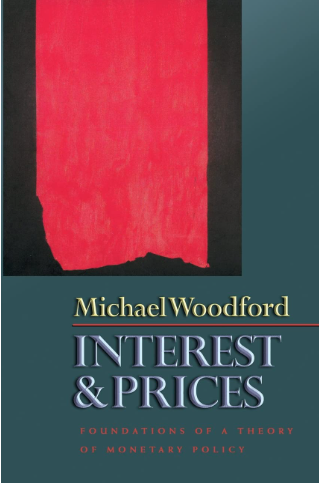
Interest and Prices
Read Online

PDF ยท 4.74 MB

Interest and Prices

Foundations of a Theory of Monetary Policy

Author(s):
Michael Woodford
Publisher: Princeton University Press
Publication Year: 2003
ISBN: 0691010498
Pages: 808 pages
Genres: (General Books)
Economics Business & Management
Statistics:
31 views 11 reads
Description

Following the end of the Bretton Woods monetary system, currencies were no longer formally tied to tangible assets such as gold. Furthermore, beginning in the 1980s, many central banks moved away from using monetary growth targets as the primary basis for conducting monetary policy. This development raises an important question: how can governments maintain public trust in the value and stability of fiat money when it is neither backed by a physical commodity nor managed through fixed targets for money supply growth? In Interest and Prices, Michael Woodford develops a theoretical framework for rule-based monetary policymaking that reflects the demands of a modern economy characterized by rapid communication and increasingly integrated financial markets. He argues that central banks must clearly define and communicate the principles underlying their policy decisions to ensure their effectiveness. Revisiting the fundamental concepts of monetary economics, Woodford demonstrates that central banks can achieve predetermined inflation objectives through interest-rate adjustments, even without commodity-backed currencies or direct control over monetary aggregates. The book also applies contemporary macroeconomic models to develop an optimal inflation-targeting framework that reconciles economic stabilization with long-term price stability. This approach incorporates explicit assessments of social welfare and addresses the New Classical critique of conventional methods for evaluating monetary policy. Ultimately, Woodford contends that a commitment to policy rules does not require inflexible decision-making that sacrifices economic stabilization for credibility. Instead, a well-designed rule-based framework can preserve flexibility in responding to economic conditions while offering significant advantages over an approach based entirely on discretionary decisions.